
Clark County Most Wanted Status
Clark County has no public most-wanted page. There is no active-warrant dashboard or county-hosted wanted photo list either. The Clark County Sheriff's Office page, the Sheriff Mark McClure staff page, and the Clark County contact page all route visitors to the sheriff's office and the Clark County Jail. The Idaho Sheriffs' Association jail directory does the same. None of them publishes a wanted roster. That absence says nothing about whether warrants exist or what the sheriff keeps in internal records. It only describes what the public can reach.
A missing list can't tell you whether someone has an active warrant. It can't confirm custody either. Warrants get recalled, satisfied, or shielded from public view, and one agency may list a person while another holds them. Before relying on any county wanted page that appears later, check three things. It should sit on an official county domain, carry a date, and name the agency behind the notice.
Note: The public sources reviewed do not establish a Clark County posting cadence, update time, archive rule, or photo policy.
Clark County Wanted Listing Fields
If the county ever posts an official wanted page, record what the agency actually says. Don't lift a name out of context. The fields here separate the identity of the notice from the legal and safety details that make it verifiable. Some fields stay private. A blank field should never be filled with a guess.
| Field | What it should establish |
|---|---|
| Name and aliases | The exact name used by the issuing agency and any alternate names shown. |
| Photo source | Whether an image came from the sheriff, another agency, or an identified public record. The image belongs on the source page, not here. |
| Posting date | When the notice was first made public, if the agency supplies that date. |
| Alleged offense or warrant type | The stated basis for the notice, such as an arrest warrant, bench warrant, or probation matter. |
| Case or warrant number | A public identifier that helps distinguish similar names and supports a court inquiry. |
| Issuing court | The court connected to the warrant or case, when the source discloses it. |
| Bond information | A bond amount or release condition only when the issuing source makes it public. |
| Last-known-location wording | The agency's cautious wording, without turning it into a present address or a claim of current location. |
| Update date | When the entry was last reviewed, changed, or marked resolved. |
| Official tip channel | The agency phone, web form, or 911 direction. Do not invent a reward or anonymity policy. |
Think of the table as a verification checklist, not a photo gallery request. A wanted notice can vanish after an arrest or court action, while a cached copy lingers elsewhere online. The reverse happens too. A warrant record can exist with no public photo and no list entry at all. So the safest note includes the source URL, the agency, and custody status only when that agency confirms it.
Clark County Wanted List Steps
Once a verified official list exists, treat it as a lead for safe reporting and source checking. The page may be selective. It may highlight only the cases where officers need public help, not every warrant in the county. The sequence below keeps four things together. Those are the source, the date, the legal status, and the safety step.
- Open the county or agency page from an official government domain. Confirm that it identifies the Clark County Sheriff's Office or the actual issuing agency.
- Read the entry as written. Note the name, aliases, date, stated warrant or offense type, case number, issuing court, and any update language.
- Do not treat a photograph, age, or last-known-area phrase as a positive identity match. Similar names and old images can mislead.
- If the person is recognized, send the information through the listed official tip route. For an emergency or immediate danger, call 911.
- Do not approach, follow, confront, photograph, or try to detain the person. Leave the arrest decision to law enforcement.
- For a later record check, use the county-wide Clark County booking and records path to distinguish a current jail inquiry from a court or agency record request.
A capture on a warrant may lead to a Clark County Jail booking, but that booking is its own separate event. The person could be released, transferred, or held by another agency before any public court entry shows up. A news story or social post can't replace the sheriff's custody answer or the clerk's case record.
Clark County Tip and Safety Route
Clark County posts no Crime Stoppers program. No reward schedule, anonymous tip number, or wanted-list tip form appears in public view. Any future notice must be read for its own instructions, since no standing tip program exists. Don't copy a tip number from another Idaho county, a commercial site, or an old social post. Start with the sheriff's direct route instead.
Clark County Sheriff's Office
224 W. Main St.
Dubois, ID 83423
208-374-5403
Need to know who holds a warrant or a tip in Clark County? Call the sheriff or the jail. Either line can point you to the right agency. For emergencies, dial 911 instead.
County or Clerk Routing
Clark County general county materials list
208-374-5304
208-374-5304
Use this route for a county or clerk question, then confirm the correct custodian before sending any records request.
Do not turn a tip into a public accusation. Give the agency the source, the reason for the concern, and only information that can help officers assess it. The agency may not disclose the result of an investigation. A caller also should not assume that a wanted notice means a person is dangerous or that a reward exists.
Check a Clark County Warrant
Start with Idaho's iCourt Smart Search and Search Hearings, where public case and hearing records live. Add enough detail to separate people who share a name. Then call the Clark County Sheriff's Office at 208-374-5403 and ask which agency or clerk verifies warrants. For a court-file question, use the county's official contact route and the Clark County clerk page. The clerk number is 208-374-5304. Neither line works like a warrant dashboard, and a name-only search may not get you an answer.
- Gather the person's full name and any lawful identifying detail that helps avoid a mistaken identity. Keep the inquiry focused on the warrant or case.
- Run the name through iCourt and check both Smart Search and hearing information when the portal offers both. Record the county, case number, filing, hearing, and disposition entries that match.
- Call the sheriff and ask whether it is the right custodian for the possible warrant. Ask whether the issue is an arrest warrant, bench warrant, summons, or another court process.
- Call the county or clerk route for a court-file question. A clerk can explain where copies or case records are requested, while the sheriff may control operational warrant information.
- If the record is not available online, submit a narrow written request to the agency that holds the existing record. Identify the person, date range, case or incident number if known, and the record sought.
- For a personal warrant concern, speak with a lawyer or the court about lawful resolution. Do not use a public search to plan an encounter or avoid officers.
Want to file a public-records request in Idaho? The state attorney general's public-record guidance spells out what belongs in one. You need your name, contact details, Idaho residency, and a clear description of the records. Timelines vary. An in-state resident can wait up to ten working days; a non-resident may wait up to 35. The first two hours of staff labor, or the first 100 pages, come free under the stated conditions. These are general public-records rules only. They don't guarantee a warrant file exists or that an image will be released. Clark County itself publishes no fee schedule or promised response time for warrant requests.
Note: A blank iCourt result is not warrant clearance, and a wanted listing is not proof that someone is currently in custody.
Clark County Warrant Types
Warrant type shapes what the public can see. That matters here. Idaho Court Administrative Rule 32 governs access, sealing, exemptions, and disclosure across the state's courts, and it draws sharp lines between kinds of warrants. Supporting affidavits tied to an arrest warrant that has not been returned, or to a search warrant, may stay restricted. Bench warrants get different treatment. Law enforcement can choose to release arrest-warrant details at its own discretion. This is why a careful iCourt search can still end with an open question rather than a clear answer.
| Record or process | Practical reading | Next official step |
|---|---|---|
| Arrest warrant | A court-authorized process tied to an alleged offense. The public file may be limited before return. | Check iCourt, then ask the sheriff which custodian can verify it. |
| Search warrant | Authorizes a search and may have supporting material that remains restricted while unreturned. | Do not assume a missing affidavit means no warrant. Ask the responsible court or agency. |
| Bench warrant | A court process often connected to a missed appearance or court condition. It is not the same as a new criminal conviction. | Ask the clerk or court about the case and the lawful way to address it. |
| Summons | A direction to appear that is different from an arrest warrant. | Read the court notice and confirm the appearance route with the clerk. |
Go straight to Idaho Court Administrative Rule 32 for the controlling text. Don't trust a search-engine snippet. The source interface shown below identifies the court-rule route and its access context. It is not a wanted-person image. It shows no Clark County list. Open the Idaho court-rule source before drawing conclusions from a restricted warrant result.
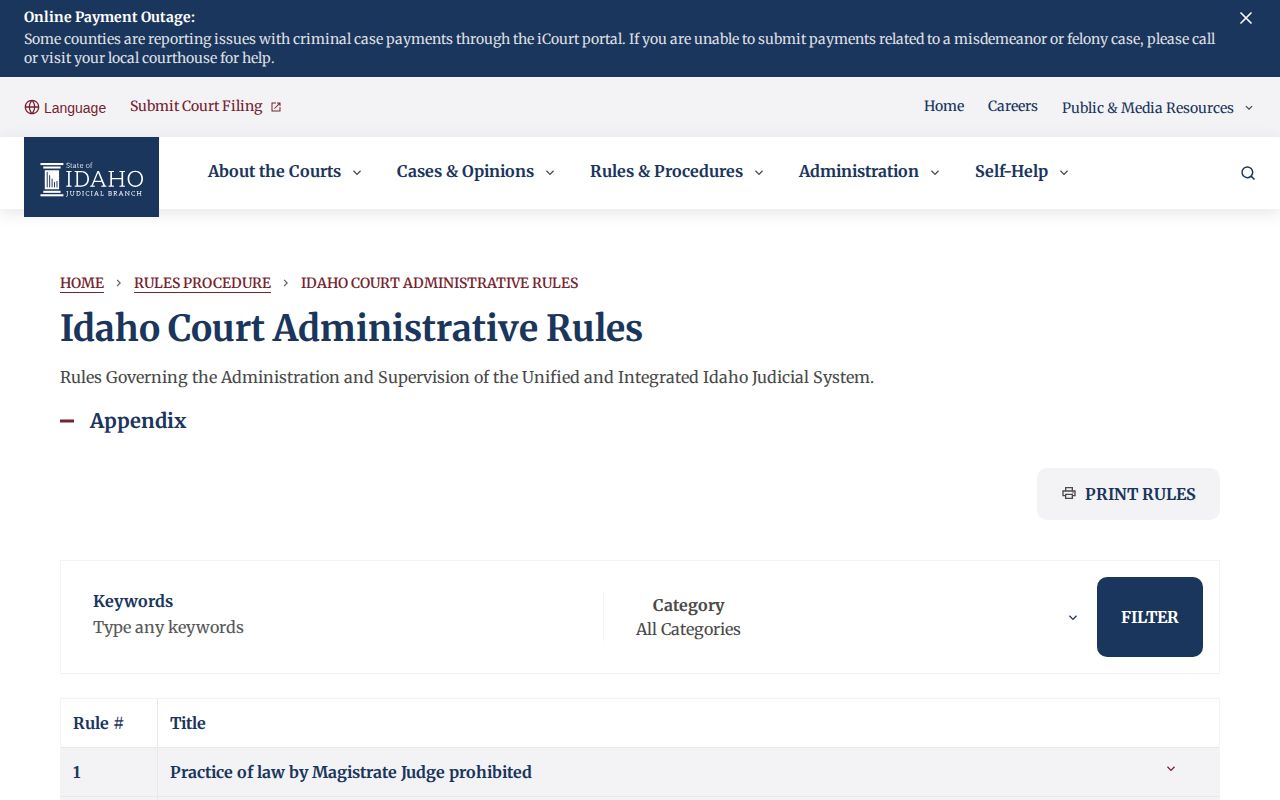
Note: The Clark County warrant screenshot below preserves a Rule 32 source interface to explain access limits, not to display or rehost anyone's booking photograph.
Why Clark County Warrants Need Checks
Warrants pose their own access puzzle because three different offices may hold three different pieces: the public court record, the law-enforcement file, and the custody record. Clark County has no wanted page. iCourt does not promise a complete active-warrant index either. A case can be public while material tied to an unreturned warrant stays restricted, and a person can have a court entry without ever being jailed in Clark County.
What you want is a verified answer from the right custodian, not a dramatic label on some unverified site. Ask the agency directly whether it is checking a current warrant, a recalled process, a bench warrant, or an old case entry. Write down the office name, the date of the answer, and any steps given for lawful resolution. If the question involves your own warrant, go through an attorney or the court's process instead of interpreting a third-party result.
Precise labels also protect people from false custody claims. "Wanted" can mean a request for information. "Arrested" describes an event. "Booked" means jail intake, and "in custody" is a current status that can shift at any time. "Convicted" is a court result, and it never follows automatically from a wanted notice.
Clark County State and Federal Sources
The Idaho Department of Correction fugitive-recovery page is a statewide tip source. It is not a Clark County wanted list and offers no county warrant count, so it only fits matters involving IDOC supervision or a state fugitive request. A separate IDOC tool, the Resident/Client Search, covers people under state custody, probation, or parole. Treat it as its own system. It is not a current Clark County jail roster, and its public results do not show booking photographs.
Two federal tools sit outside the county picture too. The Federal Bureau of Prisons inmate locator searches federal custody by name or register number, so a hit there speaks to federal custody or location, not a Clark County booking. The U.S. Marshals Service's profiled fugitives page is a separate national publicity program. Neither one fills the gap left by a missing county list.
Cross-agency custody can shift the correct source quickly. One person might be arrested by Idaho State Police, booked in a county facility, moved to another county, placed under IDOC supervision, or held federally. So sort out three things first: who made the arrest, who holds the person now, and who created the image or record. Then make the request.
View the official IDOC fugitive-recovery source for the state-level tip context shown below.
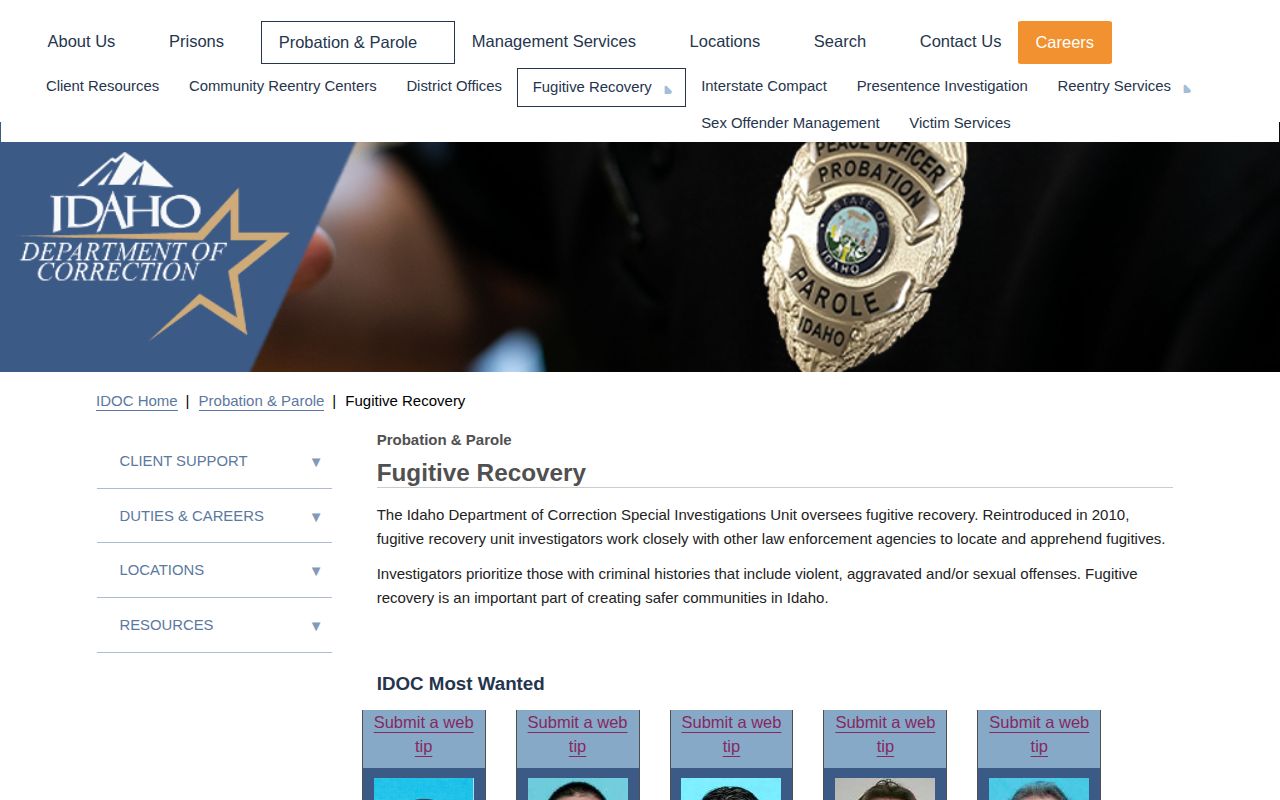
The IDOC screenshot below documents a statewide route, not a Clark County photo list, and it rehosts no local booking gallery.
Open the federal inmate locator source when the real question is federal custody.
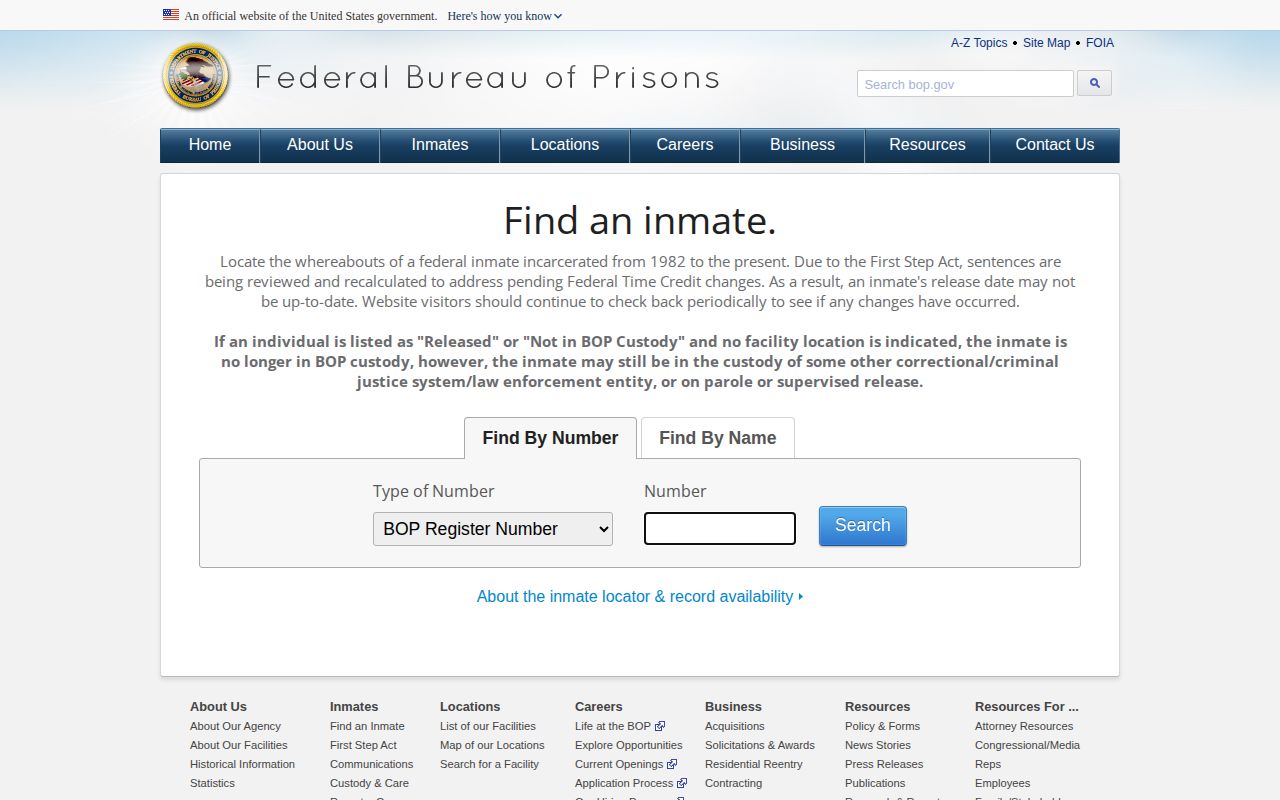
Note: The BOP screenshot shows the federal locator path only, and it does not establish a Clark County arrest, current jail status, or a public booking photograph.
After a Clark County Warrant Event
The paper trail does not stop once a warrant event happens. An arrest can trigger booking and identification records at the holding facility. From there, Idaho Criminal Rule 5 governs the initial appearance along with the probable-cause and release steps. A public court case may surface afterward. Or it may stay closed off because it is sealed, exempt, juvenile, or simply not filed yet.
When the case is public, iCourt lets you track hearings, filings, and the disposition. That word just means the court's final outcome, whether a dismissal, an acquittal, a plea, or a judgment. Custody can shift too. Someone released from jail may still show up in an old booking record or news story.
For the wider set of paths, covering booking records, courts, IDOC, and records requests, begin at the official Clark County routing on the county busted-mugshots hub. Keep the custody label and source date attached to anything you save.
Safe Clark County Next Steps
A wanted notice is not permission to act on your own. Don't approach a person, follow them, or try to hold them, no matter what a photo, rumor, or news story suggests. Leave that work to trained officers. If something is happening right now, call 911. For anything less urgent, route your tip through the official agency channel, or bring a general question to the sheriff, the clerk, or whichever office holds the record.
A fast name match means little here. Clark County puts only a small slice of its records in public view, so careful routing beats speed every time. Before you act on what you find, nail down the basics: which agency posted it, what type of record it is, when it was dated, and whether the person is still in custody. If the public answer falls short, say so plainly. Ask the custodian what can be verified or what you can request next.